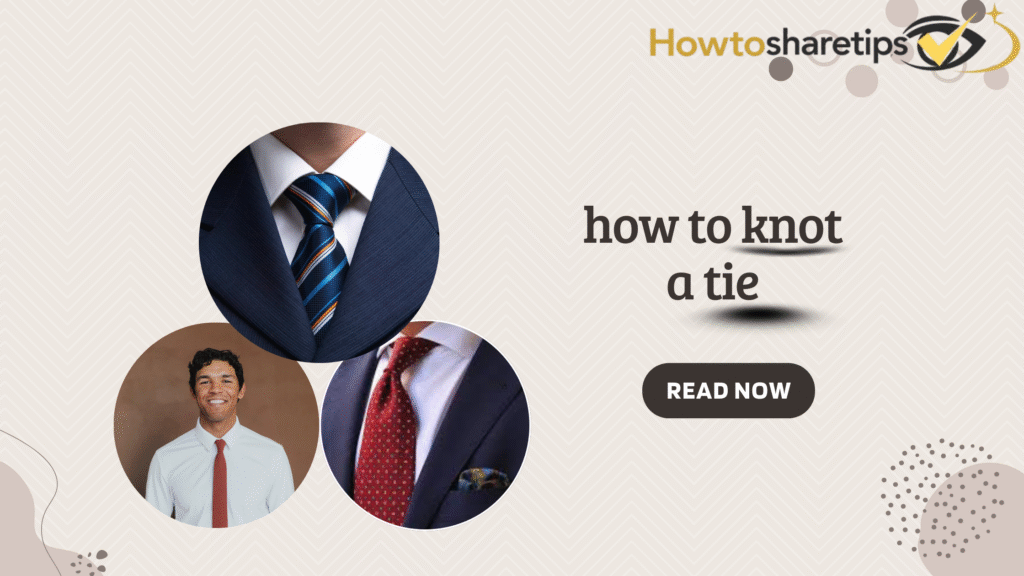

Tying a tie is a skill every man should know. Whether you are dressing up for a job interview, a wedding, or a formal event, a properly tied tie can make a big difference in both your appearance and your confidence. But how exactly do you tie a tie?
How to Tie a Tie: A Guide for Beginners
There are many different ways to knot a tie, and each one has its own advantages and disadvantages. In this guide, you will learn several easy methods to tie a tie, along with tips for choosing the right knot for your tie and the occasion.
Method 1: The Four-in-Hand Knot
The four-in-hand knot is one of the most popular and versatile ways to tie a tie. It is quick to learn, easy to master, and works well with most ties and collars. The knot is slightly asymmetrical and narrow, making it perfect for casual and semi-formal occasions.
Steps to tie a four-in-hand knot:
- Drape the tie around your neck, with the wide end on your right side and the narrow end on your left. The wide end should hang about 12 inches (30 cm) lower than the narrow end.
- Cross the wide end over the narrow end and hold them together near your neck with your left hand.
- Loop the wide end under the narrow end and bring it back to your right side.
- Cross the wide end over the narrow end again at the same point where you are holding the knot.
- Pull the wide end up through the neck loop and fold it under itself.
- Insert the wide end down through the front of the knot and pull it through.
- Tighten by holding the narrow end and sliding the knot up to your collar. Adjust to make it neat and straight. For a polished look, you can also pinch the sides of the tie below the knot to create a slight dimple.
Method 2: The Half-Windsor Knot
The half-Windsor knot is more formal and elegant than the four-in-hand. It produces a medium-sized, symmetrical knot that works well with medium-width or thicker ties and with spread or wide-spread collars.
Steps to tie a half-Windsor knot:
- Drape the tie around your neck, with the wide end on your right side and the narrow end on your left. The wide end should hang about 14 inches (36 cm) lower than the narrow end.
- Cross the wide end over the narrow end and hold them together near your neck with your left hand.
- Loop the wide end under the narrow end and bring it back to your right side.
- Pull the wide end up through the neck loop and fold it over to your left side.
- Cross the wide end over the narrow end again at the same point.
- Pull the wide end up through the neck loop again and fold it under itself.
- Insert the wide end down through the front of the knot and pull it through.
- Tighten the knot by sliding it upward while holding the narrow end. Adjust until it is straight and symmetrical, and create a dimple if desired.
Method 3: The Windsor Knot
The Windsor knot, also called the full Windsor or double Windsor, is the most formal and sophisticated option. It creates a large, symmetrical, triangular knot that pairs well with wide ties and spread collars. The style was popularized by the Duke of Windsor.
Steps to tie a Windsor knot:
- Drape the tie around your neck, with the wide end on your right side and the narrow end on your left. The wide end should hang about 16 inches (40 cm) lower than the narrow end.
- Cross the wide end over the narrow end and hold them together near your neck.
- Loop the wide end under the narrow end and bring it back to your right side.
- Pull the wide end up through the neck loop and fold it over to your left side.
- Cross the wide end under the narrow end and bring it back to your right side.
- Pull the wide end up through the neck loop again and fold it over to your left side.
- Cross the wide end over the narrow end once more at the same point.
- Pull the wide end up through the neck loop and fold it under itself.
- Insert the wide end down through the front of the knot and pull it through.
- Tighten the knot by sliding it up toward your collar while holding the narrow end. Adjust until it is neat, straight, and triangular. Add a dimple for a refined finish.
Method 4: The Simple Knot
The simple knot, also known as the oriental or small knot, is the easiest and fastest method. It produces a small, slightly asymmetrical knot that works best with narrow ties and pointed or button-down collars.
Steps to tie a simple knot:
- Drape the tie around your neck, with the wide end on your right side and the narrow end on your left. The wide end should hang about 4 inches (10 cm) lower than the narrow end.
- Cross the wide end over the narrow end and hold them together near your neck.
- Loop the wide end under the narrow end and bring it back to your right side.
- Pull the wide end up through the neck loop and fold it over to your left side.
- Insert the wide end down through the front of the knot and pull it through.
- Tighten by sliding the knot up while holding the narrow end. Adjust until it is neat and aligned.
Frequently Asked Questions (FAQs) About Using Chopsticks
Chopsticks are more than simple eating utensils—they are an integral part of many Asian cultures, including Chinese, Japanese, Korean, and Vietnamese. They carry historical significance, etiquette rules, and even symbolism in dining traditions. For beginners, chopsticks can seem intimidating, but with proper guidance, anyone can learn to use them effectively. The following FAQs cover common questions and provide detailed answers to help you master the skill.
1. Can anyone learn to use chopsticks, even beginners?
Yes, anyone can learn to use chopsticks with patience, practice, and proper technique. Many beginners feel frustrated when starting because controlling two thin sticks requires fine motor coordination. However, learning is achievable for all ages, from children to adults. The key is understanding the basic principle: one chopstick acts as a stationary anchor while the other moves to pinch and lift food.
For beginners, starting with soft or sticky foods is recommended. Sticky rice, small dumplings, or cut vegetables are easier to grip and less likely to slip. Practicing with small household items such as beans, grapes, or even coins can help strengthen hand-eye coordination and build muscle memory. Regular practice, even for a few minutes daily, significantly accelerates learning.
Consistency is crucial. Initially, movements may feel awkward, but over time, the technique becomes intuitive. Many learners find that within a few days or weeks of consistent practice, they can comfortably use chopsticks to eat a variety of dishes. Patience, repetition, and gradual progression from simple to more challenging foods ensure that beginners gain confidence and proficiency.
2. How do I hold chopsticks correctly?
Proper grip is the foundation for effective chopstick use. Start by placing one chopstick in the crease of your thumb and resting it against the ring finger. This chopstick remains stationary throughout the meal and acts as an anchor. The stability of this chopstick ensures that you can control your movements without dropping or crushing food.
The second chopstick is held like a pencil using your thumb, index finger, and middle finger. This is the active chopstick, which moves to pinch and lift food. The motion should come from the fingers rather than the wrist to maintain precision. Holding the chopsticks too tightly can crush delicate foods like tofu or sushi, while holding them too loosely may result in food slipping. A relaxed but steady grip is ideal.
Beginners can practice by picking up small objects like beans, beads, or coins before moving on to food. This builds finger strength and improves coordination. Start with larger or firmer foods such as sticky rice, sliced vegetables, or pre-cut meat to reinforce proper motion. Over time, you’ll develop the dexterity to handle slippery or irregularly shaped foods, making chopsticks feel natural and effortless.
3. Are there cultural rules I should know?
Yes, chopsticks are not only functional but also carry cultural and symbolic meanings in many Asian countries. Observing proper etiquette demonstrates respect for the culture and the host.
One of the most important rules is never to stick chopsticks upright in rice. In countries such as China and Japan, this practice resembles the incense sticks used in funeral rituals and symbolizes death. Doing this at a dining table is considered highly disrespectful.
Other etiquette rules include avoiding pointing at others with chopsticks, crossing chopsticks on the table, or using them as toys. Passing food directly from chopstick to chopstick is also discouraged, as it mimics funeral ceremonies. Additionally, rubbing disposable chopsticks together is impolite because it suggests that they are of poor quality and can be insulting to the host.
After eating, place chopsticks neatly on a chopstick rest or across the side of your plate. Avoid leaving them on the table or sticking them into bowls. Following these rules not only improves your skill but also demonstrates awareness of cultural traditions, enhancing the overall dining experience.
4. What foods are easiest to eat with chopsticks?
For beginners, choosing the right foods makes learning chopsticks easier and more enjoyable. Sticky rice is ideal because its clumped texture allows for a stable grip. Noodles, such as ramen, udon, or soba, provide practice for lifting long strands without dropping them. Dumplings, whether steamed, boiled, or fried, are also beginner-friendly because their edges provide natural pinching points.
Sushi, tofu, stir-fry dishes, and small, pre-cut pieces of meat or vegetables are excellent for developing chopstick skills. These foods are firm enough to hold without breaking, while soft enough to avoid excessive difficulty. Bite-sized pieces are recommended for those just starting.
Avoid slippery or oversized foods at first, such as large fried chicken pieces or oily fish, which can be frustrating for beginners. Once proficiency improves, more challenging dishes can be attempted. Understanding which foods are easiest to manage allows learners to practice effectively and progressively tackle more difficult foods.
5. How can I improve my chopstick skills quickly?
Improving chopstick skills requires consistent practice and patience. Start with small objects at home, such as beans, coins, or marbles, to develop finger coordination. Once comfortable, move on to food items like sticky rice, noodles, or cut vegetables. Gradually increase complexity as confidence grows.
Daily practice is important, even if only a few minutes. Focus on controlled, precise movements rather than speed at first. Smooth and accurate motion is more effective than rushing and dropping food. Observing experienced users or instructional videos can also provide valuable insight into hand positioning, wrist movement, and subtle techniques.
Experimenting with different types of chopsticks—wooden, bamboo, metal, or plastic—helps determine the most comfortable option for you. Each material offers a different grip and weight, which may affect control. Beginners should also focus on posture, holding chopsticks near the thicker end, and keeping their hand relaxed to prevent fatigue.
Progressively challenging yourself with slippery or irregular foods strengthens fine motor skills and enhances confidence. Over time, using chopsticks becomes natural, efficient, and enjoyable. Mastery also develops patience, mindfulness, and cultural appreciation, transforming meals into a more thoughtful and engaging experience.
6. Can left-handed people use chopsticks?
Yes, left-handed individuals can use chopsticks just as effectively as right-handed people. The technique remains the same: one chopstick is stationary while the other moves to grip food. Left-handed users simply reverse the hand positioning.
Initially, left-handed learners may experience slight awkwardness if they are accustomed to right-handed tools. Practicing regularly and starting with easy foods like sticky rice, noodles, or pre-cut vegetables helps build muscle memory. Over time, left-handed users achieve the same precision and control as right-handed users, making chopsticks feel natural and intuitive.
7. How do I handle slippery or difficult foods?
Slippery foods such as tofu, cooked fish, or thin noodles can be challenging for beginners. The key is to use the tips of the chopsticks precisely and pinch gently but firmly. Tilting the food slightly or using a scooping motion can also help maintain control.
Breaking food into smaller, manageable pieces before attempting to lift it reduces frustration. Practicing with foods that are less slippery initially builds confidence and coordination, allowing learners to progress to more challenging dishes. Over time, mastery of movement and grip makes handling slippery or irregular foods manageable.
8. Are chopsticks the same in different countries?
Chopsticks vary across countries in length, shape, and material. Chinese chopsticks are typically longer and thicker, making them suitable for family-style meals with shared dishes. Japanese chopsticks are shorter with tapered ends, ideal for picking up delicate foods like sushi. Korean chopsticks are often flat, metal, and designed for precision when handling side dishes and grilled foods.
Despite these differences, the basic technique—one chopstick stationary and the other moving—remains consistent. Understanding these variations enhances cultural appreciation and can improve comfort when using different types of chopsticks abroad.
9. What are common mistakes to avoid?
Common mistakes include holding chopsticks too tightly, stabbing food instead of pinching it, and rubbing disposable chopsticks together. Sticking chopsticks upright in rice or passing food directly from chopstick to chopstick are also considered disrespectful in many cultures.
Other errors include crossing chopsticks, pointing with them, or using them to play. Awareness of these mistakes ensures respectful and skillful use. Practicing proper grip, observing etiquette, and choosing manageable foods minimize errors and improve the dining experience.
10. Why is learning chopstick etiquette important?
Chopstick etiquette reflects cultural awareness and respect for tradition. Observing proper use enhances the dining experience, demonstrates mindfulness, and prevents accidental offense. Whether eating at a friend’s home, a restaurant, or abroad, proper etiquette ensures you are welcomed and appreciated.
Learning etiquette also deepens understanding of Asian culinary traditions. Using chopsticks correctly transforms a simple meal into a more thoughtful, cultural, and mindful experience.
Conclusion
Learning to use chopsticks is achievable for anyone with patience, practice, and attention to detail. By mastering proper grip, following etiquette, starting with easy foods, and practicing regularly, beginners can become proficient. Chopsticks provide more than utility—they connect diners to centuries of culture, encourage mindfulness, and enhance appreciation for food.
With consistent effort and gradual progression, using chopsticks becomes intuitive, precise, and enjoyable. Mastery not only improves dining skills but also fosters patience, coordination, and cultural understanding. Embracing chopsticks transforms mealtime into a thoughtful, respectful, and engaging experience, enriching both daily meals and special occasions.