
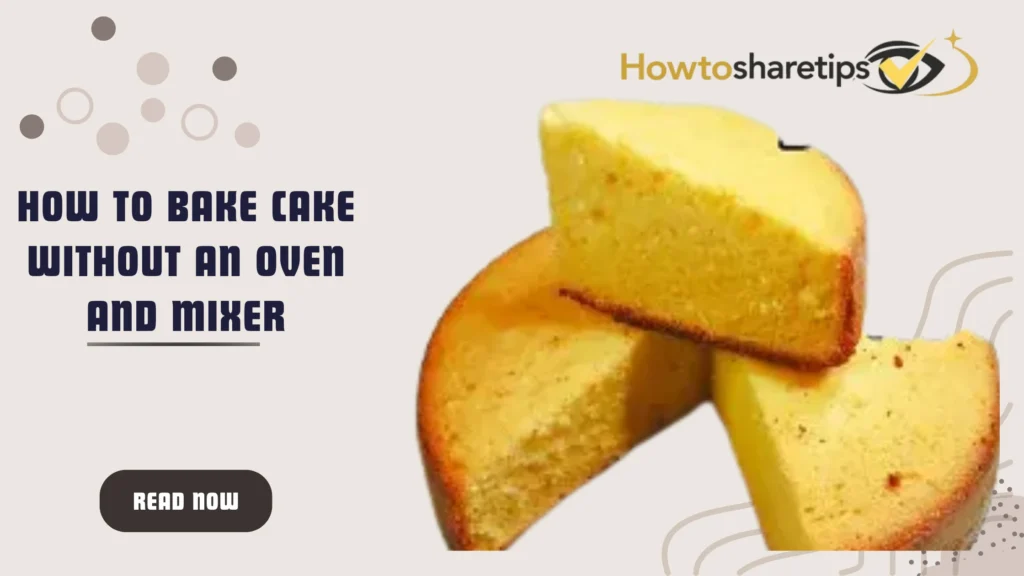

There’s nothing as satisfying as learning how-to-bake-cake and creating a soft, fluffy vanilla cake right in your own kitchen—even if you don’t have an oven or electric mixer. Many people think baking a cake requires fancy equipment, but that’s not true. With just a large cooking pot, a few simple ingredients, and the right method, you can make a homemade cake that is moist, buttery, and full of flavor.
This guide is perfect for beginners, students, or anyone who wants to enjoy a freshly baked cake without stress. Follow these easy steps, and you’ll master how-to-bake-cake to create a delicious vanilla cake that tastes just as good as one baked in a traditional oven.
This recipe is simple, beginner-friendly, and perfect for anyone who doesn’t have baking equipment at home but still wants to enjoy a delicious homemade cake. With the right technique, you can achieve the same beautiful results as oven-baked cakes using just a large pot and a few common kitchen tools. So, let’s get started!
Step 1: Prepare Your Stove-Top “Oven”
The first thing you need is a very large pot, because this will serve as your oven. Spread a layer of salt evenly across the bottom of the pot, you can also use clean sand if that’s what you have available. This step is important because the salt or sand helps distribute heat evenly, preventing the cake from burning at the bottom. Next, place something inside the pot to act as a stand, such as a removable stove top, an empty tuna can with both ends cut out, or a small metal rack. This creates a barrier between the cake pan and the direct heat. Without this stand, the cake may cook unevenly or burn. Once the pot is set up, cover it with a lid and allow it to preheat on low heat while you prepare the cake batter.
Step 2: Mix the Dry Ingredients
Now, let’s prepare the dry ingredients. In a clean mixing bowl, add your flour, a pinch of salt, and baking powder. Use a whisk or spoon to combine everything thoroughly so the ingredients are evenly distributed. This step may seem simple, but it’s important because it ensures your cake will rise well and have a soft, fluffy texture. Always check my description box for the full list of ingredients and exact measurements so you can get the proportions right. Once the dry mixture is ready, set it aside and move on to the wet ingredients.
Step 3: Prepare the Eggs
Crack five medium or large eggs into a separate bowl. If your eggs are small, use six instead to achieve the right volume and consistency. Eggs are crucial in this recipe because they add structure, moisture, and richness to the cake. Beat them lightly with a fork or whisk until they are well mixed. Set them aside until it’s time to combine them with the rest of the batter.
Step 4: Cream the Margarine and Sugar
For the fat, I am using cooking margarine because it gives the best result for this style of cake. Margarine makes the cake soft, light, and fluffy. However, if you prefer a richer flavor, you can substitute it with butter. Measure out 250 g of margarine and place it in a mixing bowl. Add one-third cup of sugar, then use a spoon, spatula, or hand whisk to beat the mixture. Keep mixing until the margarine and sugar become smooth, creamy, and slightly pale in color. This creaming process is very important because it incorporates air into the batter, which helps your cake turn out soft and fluffy. Even though we are not using a mixer, you can still achieve good results with patience and effort. The key is to mix thoroughly until the texture changes and becomes lighter.
Best Way to Cream Margarine and Sugar Without a Mixer
Creaming margarine and sugar by hand may feel hard at first, but it’s the most important step for a soft, fluffy cake. Start by scooping margarine into a bowl, then add your measured sugar.
Using a strong wooden spoon or spatula, beat them together. At first, the mixture will feel heavy and difficult to mix. Don’t give up, patience pays off here.
As you keep beating, the mixture will double in size, become lighter in color, and turn pale and creamy. This change means you’re adding air, which gives your cake its melt-in-the-mouth texture.
Scrape the sides of the bowl often so nothing is left unmixed. For extra flavor, add a few drops of vanilla extract at this stage. Think of this as the foundation of your cake, once you get it right, everything else becomes easier.
How to Add Eggs for Perfect Cake Texture
The next step is adding eggs, and this is where beginners often go wrong. Never pour in all the eggs at once, as this can shock the mixture and cause curdling.
Crack your eggs into a separate bowl first. Add them one at a time. Pour in the first egg, then beat it into the creamed mixture until fully blended. Once it disappears, add the next and repeat.
Continue until you’ve added all five eggs. This gradual method allows the eggs to bind properly with the fat and sugar, keeping the batter smooth and stable.
By the end, the mixture should look light, airy, and almost silky. This stage is crucial because it determines how fluffy your final vanilla cake will be.
Mixing Flour and Milk for Smooth Cake Batter
Once the eggs are well incorporated, it’s time for the dry ingredients. Sift flour, salt, and baking powder together so they mix evenly.
Add the flour in small batches instead of pouring it all in at once. Fold gently with your spatula in a circular motion. Do not stir harshly or overmix, as this knocks out the air and makes the cake heavy.
After folding in some flour, add half the milk. Fold gently, then add the remaining half and fold again.
The batter should come out smooth, fluffy, and balanced, not too runny and not too thick. This step may feel slow without a mixer, but folding carefully ensures a soft batter that bakes beautifully.
How to Prepare a Cake Pan Without an Oven
Before pouring in the batter, prepare your pan properly so the cake doesn’t stick or burn. Cut parchment paper to fit the base, making sure it lies flat.
If you don’t have parchment paper, grease the pan generously with margarine and dust it lightly with flour. Brush the sides with more margarine for extra safety.
Once the pan is ready, pour in the batter and spread it evenly with a spatula. Tap the pan firmly on the table five to six times to release hidden air bubbles. This small step helps the cake cook evenly without holes inside.
Baking Vanilla Cake in a Pot
Now comes the exciting part, baking without an oven. Place the prepared pan inside a large pot that you preheated with salt or sand at the bottom and a metal rack in between.
Cover the pot tightly with a lid to trap the heat. Cook gently on low to medium heat. Avoid opening the pot too often, as heat escapes each time.
After about one hour, check the cake with a toothpick. If it comes out clean, the cake is ready. If not, give it a few more minutes.
Remove the pan carefully, let the cake cool slightly, then peel off the parchment paper. If the edges look dark or burnt, trim them off, it’s normal when using a stovetop. Inside, you’ll find a golden, fluffy, and soft cake, every bit as good as oven-baked.
Enjoying Your Homemade Vanilla Cake
This vanilla cake proves you don’t need an oven or mixer to enjoy a homemade treat. The texture is light, the flavor is buttery, and the method is simple enough for anyone.
Serve it for breakfast with tea, as an afternoon snack, or even as a midnight treat. Once you master this method, you can tweak it with cocoa, fruits, or spices to create different flavors.
Baking should never feel limited by equipment. With this easy stovetop method, you can always whip up a cake that brings smiles to the table
This recipe is one of the easiest and most practical ways to bake a homemade vanilla cake without using an oven or mixer. It is simple, budget-friendly, and ideal for beginners who want to enjoy fresh, fluffy cake straight from their kitchen. The step-by-step method ensures a buttery sponge with a soft and airy texture, proving that you don’t need expensive equipment to make delicious cakes at home.
With this method, you can confidently prepare a cake that is perfect for birthdays, family gatherings, or even as a sweet treat for tea time. Baking without an oven or mixer no longer feels like a challenge; instead, it becomes an enjoyable process that allows you to create something truly special with minimal tools.
So the next time you crave a soft and fluffy vanilla sponge cake, remember this recipe. It’s quick, affordable, and guaranteed to impress anyone who takes a bite.
Frequently Asked Questions(FAQ)
1. Can I bake this cake without using an oven?
Yes, absolutely! This recipe is designed specifically for baking in a large pot, making it perfect for homes without an oven. By using a layer of salt or clean sand at the bottom of the pot, you create an even heat distribution that mimics an oven. Place your cake pan on a small stand or rack inside the pot to avoid direct contact with the heat. Cover the pot with a lid and cook on low to medium heat. The result is a soft, fluffy vanilla sponge cake that tastes just as good as an oven-baked version.
2. What can I use instead of a mixer?
You don’t need a mixer at all! A strong wooden spoon, spatula, or even a hand whisk works perfectly. The secret is to spend enough time creaming the margarine and sugar. Beat the mixture thoroughly until it becomes pale, fluffy, and slightly doubled in size. This process incorporates air into the batter, which is key to achieving a light and airy cake texture. Adding eggs gradually while mixing by hand also helps maintain the smoothness of the batter.
3. Can I use butter instead of margarine?
Yes, you can use either margarine or butter depending on your preference. Margarine is commonly used in Nigerian baking because it produces a slightly lighter sponge. Butter, on the other hand, adds a richer, more flavorful taste and a pleasant aroma. You can even use a mix of both to enjoy the best of both worlds, light texture from margarine and buttery flavor from butter.
4. How do I know when the cake is ready?
The best way to check is by inserting a toothpick or skewer into the center of the cake. If it comes out clean, without any wet batter, the cake is fully cooked. You can also observe the cake’s top, it should be golden brown and firm to the touch. Avoid opening the lid too often during cooking, as this can cause the cake to sink or cook unevenly.
5. Why did my cake burn at the bottom?
Burning usually happens when the heat is too high or the cake pan is placed directly on the pot’s bottom without a proper barrier. Always use a layer of salt or sand under the pan and cook on low to medium heat. Additionally, using a stand or rack to lift the pan slightly above the base prevents direct contact with the flame and ensures even cooking.
6. Can I make this cake without milk?
Yes, you can. Milk improves both the flavor and texture of the cake, giving it a moist and tender crumb. If you don’t have milk, you can replace it with water or a plant-based milk like soya milk or almond milk. Keep in mind that without milk, the cake may be slightly less rich, but it will still turn out soft and delicious.
7. How long does this cake stay fresh?
When stored in an airtight container at room temperature, the cake stays fresh for about 3–4 days. To extend its shelf life, you can refrigerate it for up to a week. When serving refrigerated cake, allow it to come to room temperature or warm slightly in a pot or microwave before slicing to enjoy its soft and fluffy texture.


